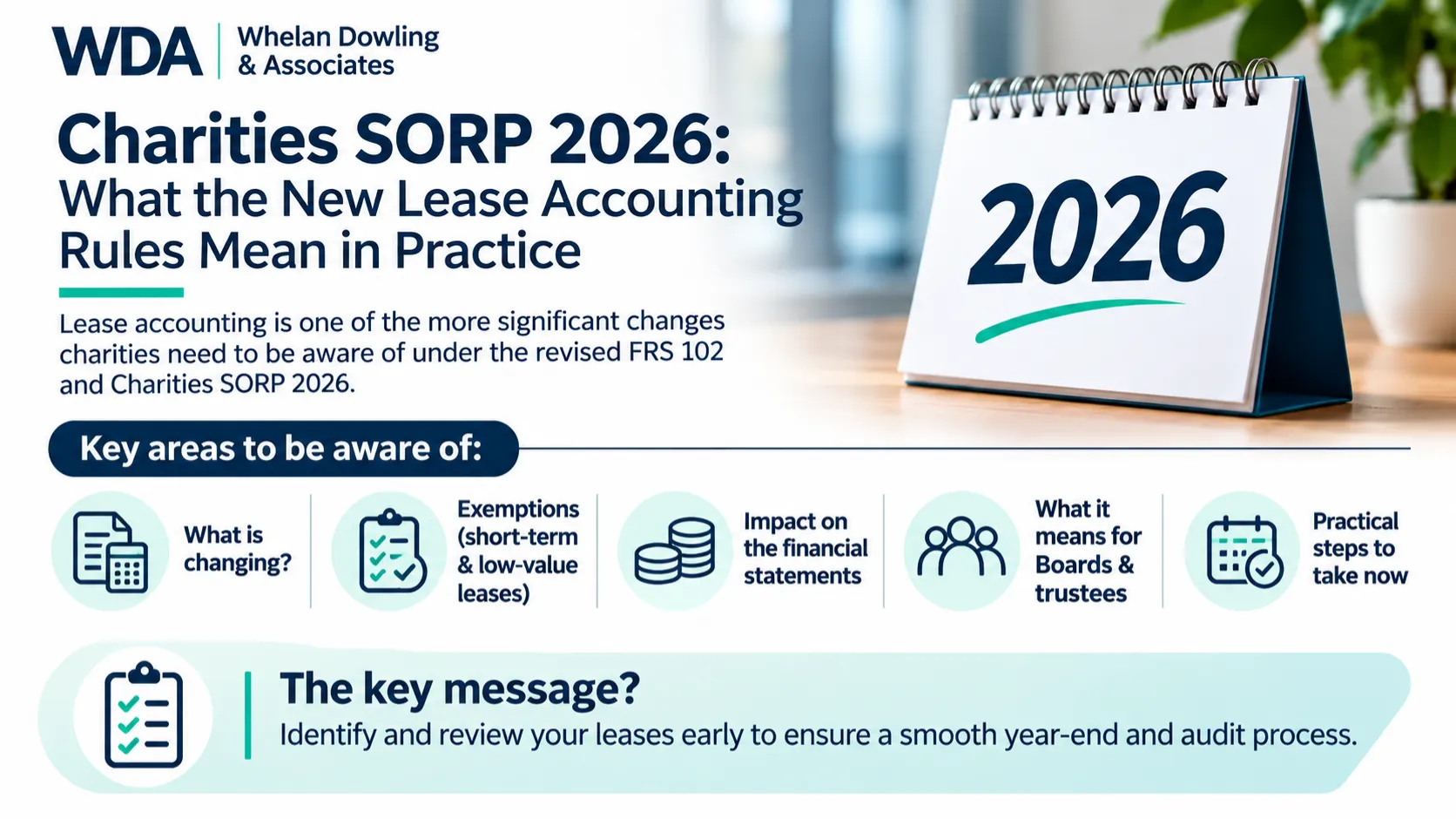
Charities SORP 2026: What the New Lease Accounting Rules Mean in Practice
Lease accounting is one of the more significant changes charities need to be aware of under the revised FRS 102 and Charities SORP 2026. For accounting periods beginning on or after 1 January 2026, the way many leases are accounted for has changed. In the past, operating lease payments were generally recognised simply as an expense. Under the new rules, many charities will now need to recognise both an asset and a corresponding liability on their balance sheet. For charities leasing offices, vehicles, equipment or other assets, it is worth understanding
the impact now rather than waiting until the year-end or audit process begins.
What Is Changing?
Under the previous accounting treatment, operating leases were generally kept off the balance sheet, with the rental payments recognised as an expense over the lease term.
Under the revised FRS 102, most leases from a lessee’s perspective will now be treated differently.
In most cases, the charity will need to recognise:
● A right-of-use asset representing its right to use the leased asset.
● A lease liability representing the future lease payments it is committed to making.
For charities with a number of significant lease commitments, this can result in a noticeable
increase in both reported assets and liabilities.
Does Every Lease Need to Be Recognised?
Not necessarily. There are exemptions available for certain leases, including qualifying:
● Short-term leases
● Low-value asset leases
This means charities will need to review their lease arrangements individually rather than applying the same treatment across the board. It is important to look at areas such as the lease term, commencement date and the nature of the asset before deciding how the agreement should be treated. For many organisations, a good first step will simply be to create a full list of existing leases
and work through them one by one.
How Will This Affect the Financial Statements?
The biggest change will usually be seen on the balance sheet. A charity may now report a higher level of assets due to the recognition of right-of-use
assets, alongside higher liabilities for the related lease obligations. There can also be changes to the Statement of Financial Activities. Instead of recognising one straightforward rental expense, the accounts may now include:
● Depreciation on the right-of-use asset.
● Interest on the lease liability.
The presentation of cash flows may also change, with the principal element of lease payments generally moving into financing activities. The important point is that the actual amount being paid under the lease may not have changed. It is primarily the accounting treatment and presentation that are changing.
Why Should Boards and Trustees Pay Attention?
Lease accounting may initially look like something that only affects the finance team, but the impact can go further than that. Changes in reported assets and liabilities may affect financial ratios and, in some cases, could have implications for borrowing arrangements or financial covenants. For that reason, trustees and Board members should have a general understanding of how
the changes could affect the organisation’s financial statements. Management should also make sure that material lease arrangements are identified early and that the necessary information is available before the accounts are prepared.
Five Practical Steps for Charities
There are a few practical things charities can do now.
1. Create a Lease Register
Prepare a complete list of property, vehicle, equipment and other lease arrangements across the organisation.
2. Review the Terms
Look at the commencement date, lease term, payment arrangements and any options to extend or terminate the lease.
3. Check Whether an Exemption Applies
Identify any leases that may qualify for the short-term or low-value exemptions.
4. Review Your Finance Systems
Make sure your current records and systems contain enough information to support the new calculations and reporting requirements. 5.Speak to Your Accountant or Auditor Early Where leases are significant or more complicated, it is worth discussing them before year-end rather than leaving them until the audit is underway.
Transitioning to the New Rules
For the initial application of the revised lease accounting requirements, the FRC provides for
a modified retrospective approach. In simple terms, this means charities do not necessarily need to go back and fully restate all comparative information. Instead, the cumulative effect of applying the new requirements is recognised at the transition date. Understanding this in advance can make the transition much easier for finance teams and help avoid unnecessary work later.
Start Preparing Before Year-End
For charities with several leases, the changes can involve quite a bit more than simply updating one line in the accounts. Lease agreements need to be identified, reviewed and assessed. The relevant calculations need to be completed and the new accounting treatment then needs to be reflected properly in the financial statements. Starting this process early can reduce pressure at year-end and help give Boards greater confidence that the organisation is prepared.
We have prepared Charities SORP 2026: Lease Accounting in Practice, a practical guide designed to help charity leaders, trustees and finance teams understand the changes and what they mean in practice.
Download your free copy from the WDA Resource Centre:
https://wda.ie/resource-centre/