SORP 2026: What Irish Charities Need to Know Before Year-End
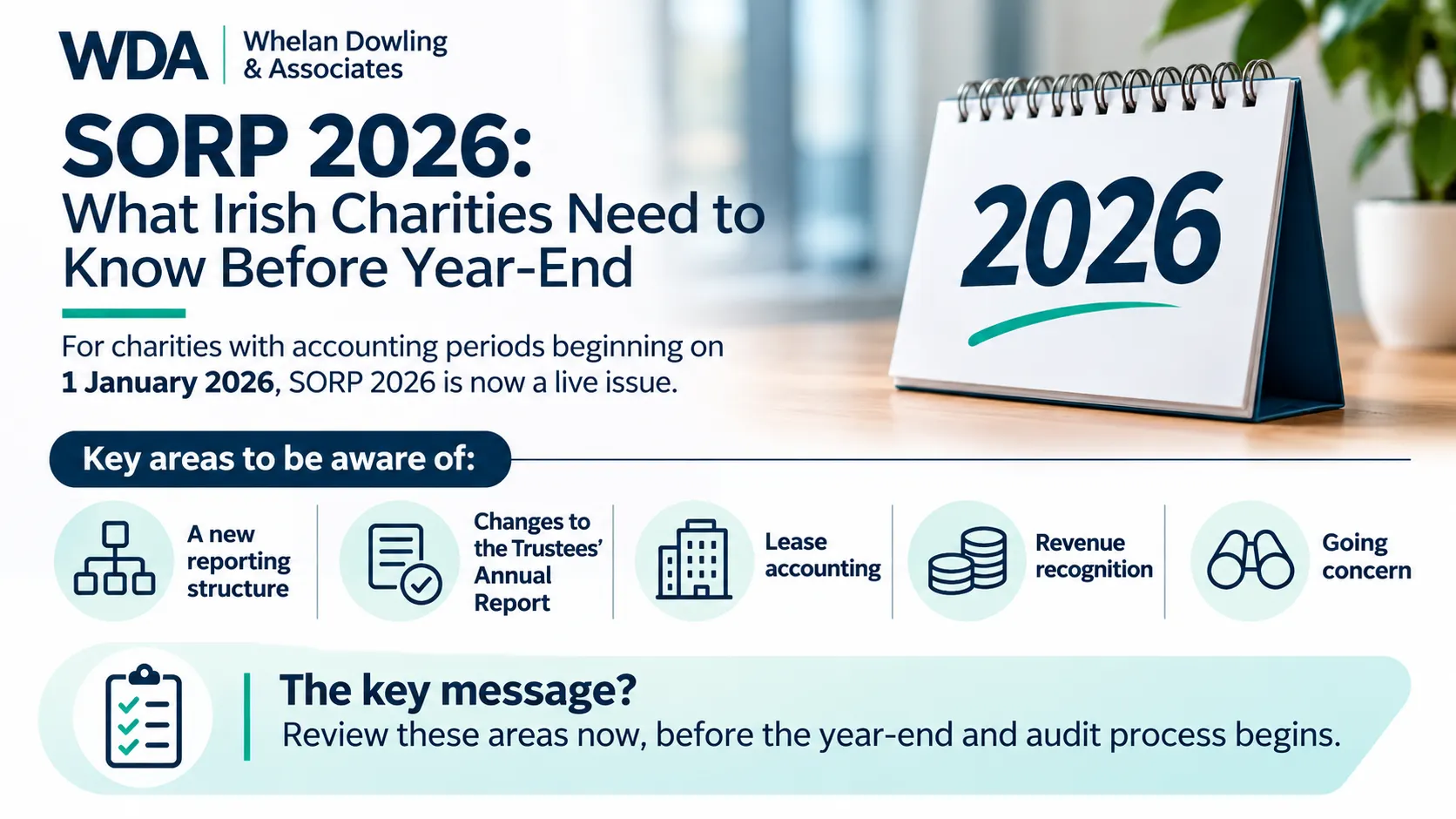
For charities with accounting periods beginning on 1 January 2026, SORP 2026 is now very much a live issue rather than something to prepare for in the future. As we move closer to year-end, Boards, trustees and finance teams should now be looking at how the new requirements will affect their 2026 financial statements and annual reporting. There are a number of important changes to be aware of, including lease accounting, revenue recognition, going concern and the information included in the Trustees’ Annual Report.
For many charities, the key message is simple: it is worth reviewing these areas before the year-end and audit process begins.
A New Reporting Structure
SORP 2026 introduces a new three-tier reporting structure based on the income of the charity. This means the level of reporting and disclosure required will vary depending on the size of
the organisation. Charities should therefore make sure they understand which tier applies to them and what additional reporting requirements may need to be considered. For Boards and finance teams, this is a useful starting point when preparing for the 2026 year-end.
Changes to the Trustees’ Annual Report
The Trustees’ Annual Report is another area where charities will see changes. There is now a greater emphasis on explaining the impact of the organisation’s work, together with additional reporting around governance, environmental and social matters. This means charities may need to think about how this information is being captured throughout the year. Leaving everything until the annual report is being prepared can create unnecessary pressure, particularly where information needs to be gathered from different teams or departments. Building these requirements into regular Board and management reporting can make the year-end process much more straightforward.
Lease Accounting
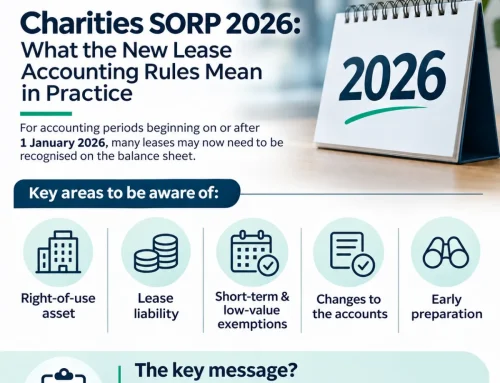
Lease accounting is likely to be one of the more noticeable changes for many charities.
Under the revised FRS 102 requirements, most leases will now need to be recognised on
the balance sheet through a:
● Right-of-use asset, representing the charity’s right to use the asset; and
● Lease liability, representing the future lease payments due.
Previously, many operating leases were simply recognised as an expense over the period of the lease. For charities renting offices, premises, vehicles or equipment, the new treatment could have a significant impact on how the balance sheet looks. It can also affect how expenditure is presented, with depreciation and interest replacing the traditional rental expense in many cases.
There are exemptions available for certain short-term and low-value leases, so each agreement should be reviewed individually. The important thing is to identify these leases early and make sure the necessary information is available before year-end.
Revenue Recognition
The revised FRS 102 also changes how certain revenue from contracts with customers is recognised. For charities with trading activities, contractual income or more complex funding
arrangements, this may require a closer look at when income should be recognised in the financial statements. Not every income stream will be affected in the same way, but it is worth reviewing larger or more complicated contracts ahead of year-end rather than waiting until the accounts are being prepared.
Going Concern
Going concern remains another important area for Boards and trustees. The assessment should look forward for at least 12 months from the date the financial statements are approved, rather than simply 12 months from the financial year-end.
This means trustees should have a clear understanding of areas such as:
● Cash flow forecasts
● Expected income and funding
● Significant expenditure commitments
● Reserves
● Key financial risks
● The assumptions being used in forecasts
Where there are uncertainties, these should be identified, considered and properly documented. Going concern should therefore be part of the wider financial oversight of the charity rather
than something considered for the first time when the audit begins.
What Should Charities Be Doing Now?
As the 2026 year-end approaches, there are a few practical steps charities can take now.
Confirm Your Reporting Tier
Establish which SORP reporting tier applies to the organisation and understand the reporting requirements attached to it.
Review Your Leases
Prepare a complete list of property, vehicle and equipment leases and identify which may need to appear on the balance sheet.
Review Key Income Streams
Consider whether any major contracts or trading income could be affected by the revised revenue recognition rules.
Look at Going Concern Early
Make sure forecasts, funding assumptions and cash flow information are up to date and available to the Board.
Review the Trustees’ Annual Report
Consider whether the organisation is already capturing the information needed around impact, governance and other reporting requirements.
Speak to Your Accountant or Auditor
If you are unsure how any of the changes apply to your charity, it is better to raise the question before year-end rather than during the audit itself.
Preparing Early Makes the Process Easier
SORP 2026 introduces some important changes, but for most charities the transition should
be manageable with the right preparation. The key is to identify the areas that affect your organisation, gather the relevant information
early and make sure the Board and finance team understand what will be required. Taking these steps now can help make the year-end and audit process more straightforward
and reduce the risk of unexpected issues arising later. At Whelan Dowling & Associates, we work closely with charities and not-for-profit
organisations across audit, financial reporting, governance, risk and advisory services. We have also developed a range of practical resources to help Boards, trustees and
management teams understand some of the key issues facing the sector.
Charities SORP 2026: Lease Accounting in Practice
For more detailed guidance on one of the biggest changes under SORP 2026, we have developed Charities SORP 2026: Lease Accounting in Practice. The guide provides a practical overview of the new lease accounting requirements and the steps charities should consider when preparing for implementation.
Download your free copy and explore our other charity resources here: